
University fountains serve purposes far beyond decoration. They reflect an institution's history, values, and identity while creating memorable spaces for students, faculty, alumni, and visitors. Through water, sculpture, lighting, and thoughtful design, fountains can establish recognizable landmarks, celebrate campus traditions, and enhance the overall university experience.
From prominent sculptural fountains to peaceful garden retreats, water features can serve a variety of functions within higher education environments. Understanding these different applications can help landscape architects, campus planners, and university administrators incorporate water into outdoor spaces in ways that complement campus architecture, support community engagement, and create lasting value.
Creating Iconic Campus Landmarks with Sculptural Water Features
Sculptural fountains combine public art and moving water to create distinctive landmarks that reflect a university's identity, history, and traditions. Often positioned near athletic facilities, academic buildings, main entrances, or central gathering spaces, these features can become recognizable symbols of campus life.
Custom sculptures, school colors, architectural details, and carefully designed water effects allow universities to incorporate meaningful elements of their identity into the surrounding landscape. These installations can also serve as popular locations for campus events, student photographs, alumni gatherings, and university celebrations.
Beyond their visual appeal, sculptural fountains can also serve important functional purposes within campus landscapes. When strategically positioned, fountains can help define pedestrian areas, guide foot traffic, organize gathering spaces, and create natural boundaries between vehicles and pedestrians. In high-traffic locations such as athletic facilities and event venues, these features can contribute to crowd management and help establish safer, more organized outdoor environments.
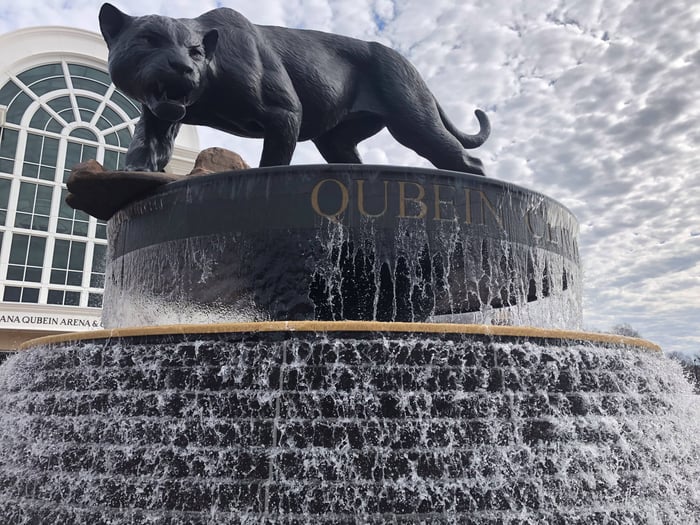
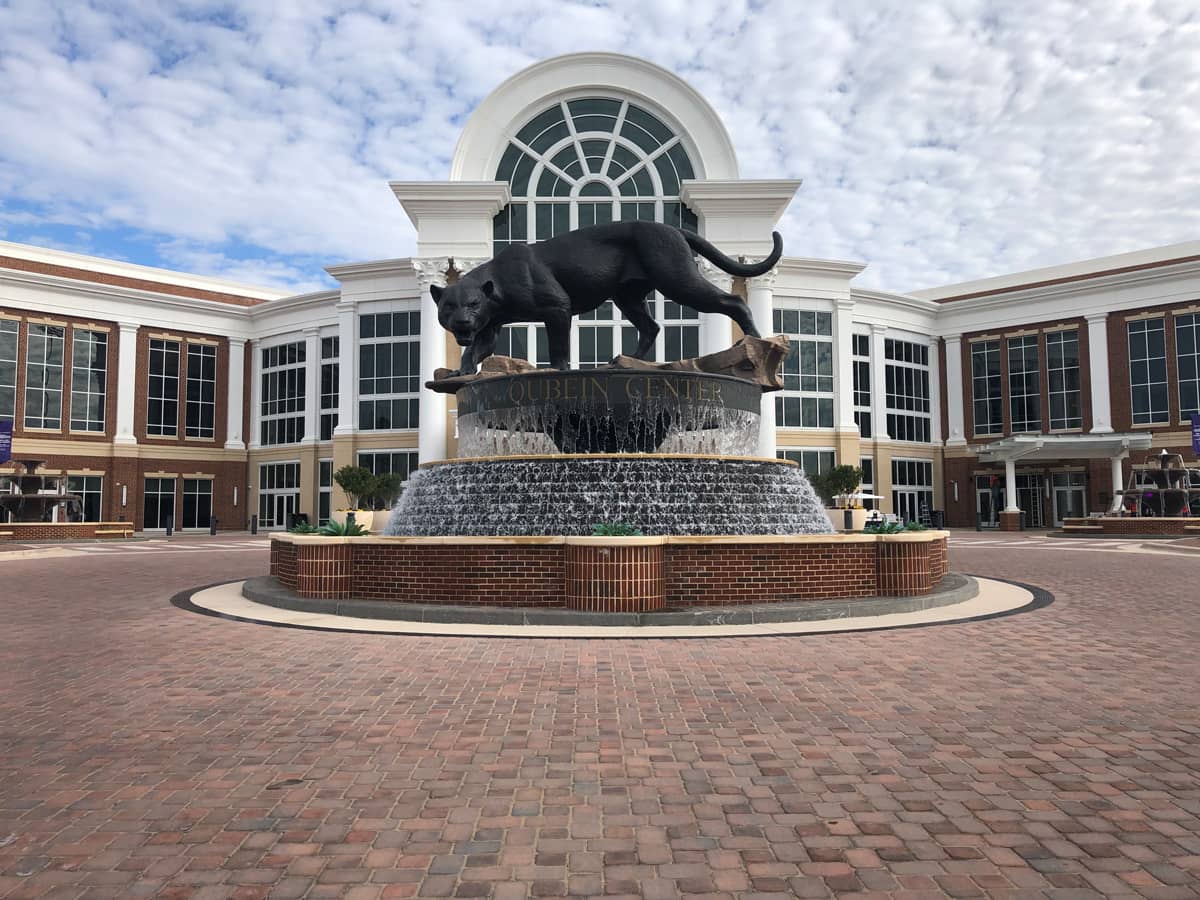
At High Point University, the Qubein Arena Panther Fountain demonstrates how sculptural water features can celebrate school pride while supporting the functional needs of a busy campus environment. A 20-foot bronze panther sculpture positioned above cascading water creates a striking landmark near the university's athletic facilities. Flanking the central fountain are two smaller, tiered bowl fountains that complement the surrounding architecture while helping direct pedestrian movement through the outdoor plaza.
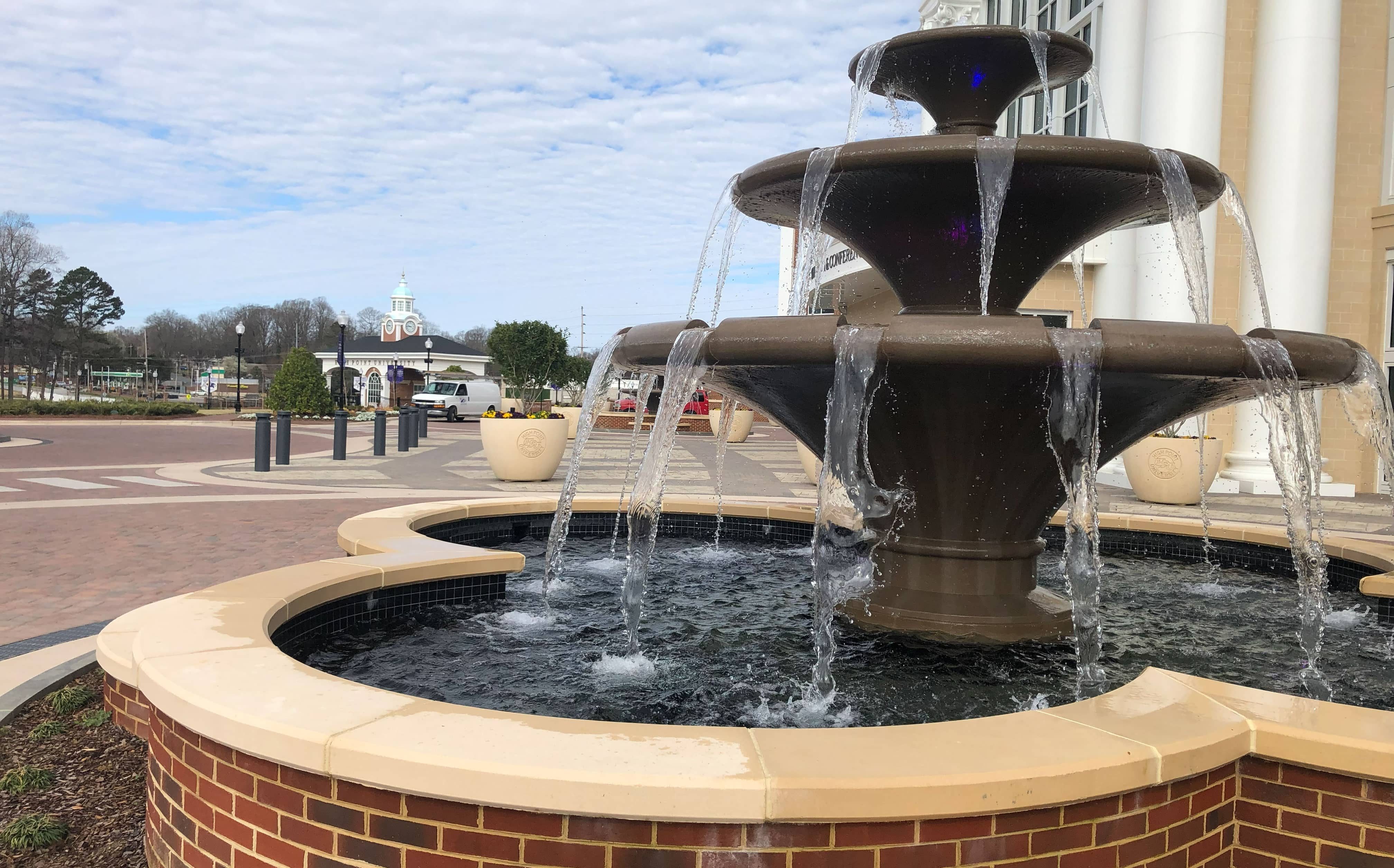
Together, the three fountains help organize the plaza's circulation, accommodate large crowds during athletic events and concerts, and establish separation between pedestrian gathering areas and vehicle access. The smaller fountains also help prevent vehicles from approaching too closely to the building, while maintaining access for deliveries, emergency vehicles, and event operations.
This thoughtful integration of sculptural artistry, architectural design, and practical functionality demonstrates how campus fountains can serve multiple purposes. Beyond creating memorable landmarks, they can enhance pedestrian circulation, support event operations, and contribute to welcoming, well-organized campus environments.
Fountain Restorations: Preserving Campus History and Heritage
Historic fountains often hold cultural and sentimental significance for universities and their surrounding communities. Whether originally constructed as memorials, commemorative installations, or gifts from benefactors, these water features can become important elements of a campus's architectural and cultural identity.
Over time, aging fountain equipment, outdated controls, deteriorating infrastructure, and changing operational requirements can affect their performance. Fountain restoration provides an opportunity to preserve the character of these landmarks while introducing modern technologies that improve functionality, reliability, and visual appeal.


The Fountain of Light, located in a triangular park adjacent to Georgia State University's downtown Atlanta campus, illustrates how fountain restoration can preserve a significant community landmark. Originally presented to the city in 1940, the fountain underwent renovations to recreate its original water effects while incorporating color-changing LED lighting and custom spray rings. Supported by the City of Atlanta and Georgia State University, the restoration helped preserve an important piece of local history while updating the fountain for continued enjoyment.
This project demonstrates how fountain restorations and equipment upgrades can extend the life of existing water features while preserving their historical and cultural significance. By combining modern fountain technology with thoughtful design, universities can maintain meaningful campus landmarks for future generations.
Architectural Fountains: Enhancing Campus Plazas and Gathering Spaces
Not every university fountain needs to be a dramatic centerpiece. Traditional architectural fountains can enhance plazas, courtyards, pedestrian corridors, and building entrances by introducing movement, sound, and visual interest into everyday campus environments.
These features are often designed to complement surrounding architecture through carefully selected basin shapes, materials, water effects, and lighting. Symmetrical arrangements, vertical geyser jets, bubbling effects, and subtle water movement can create attractive focal points without overwhelming the surrounding landscape.
Architectural fountains can also help establish a sense of place within larger campus environments. Positioned near academic buildings, libraries, student centers, or administrative facilities, they can define gathering areas, soften hardscapes, and create inviting spaces for informal interaction.
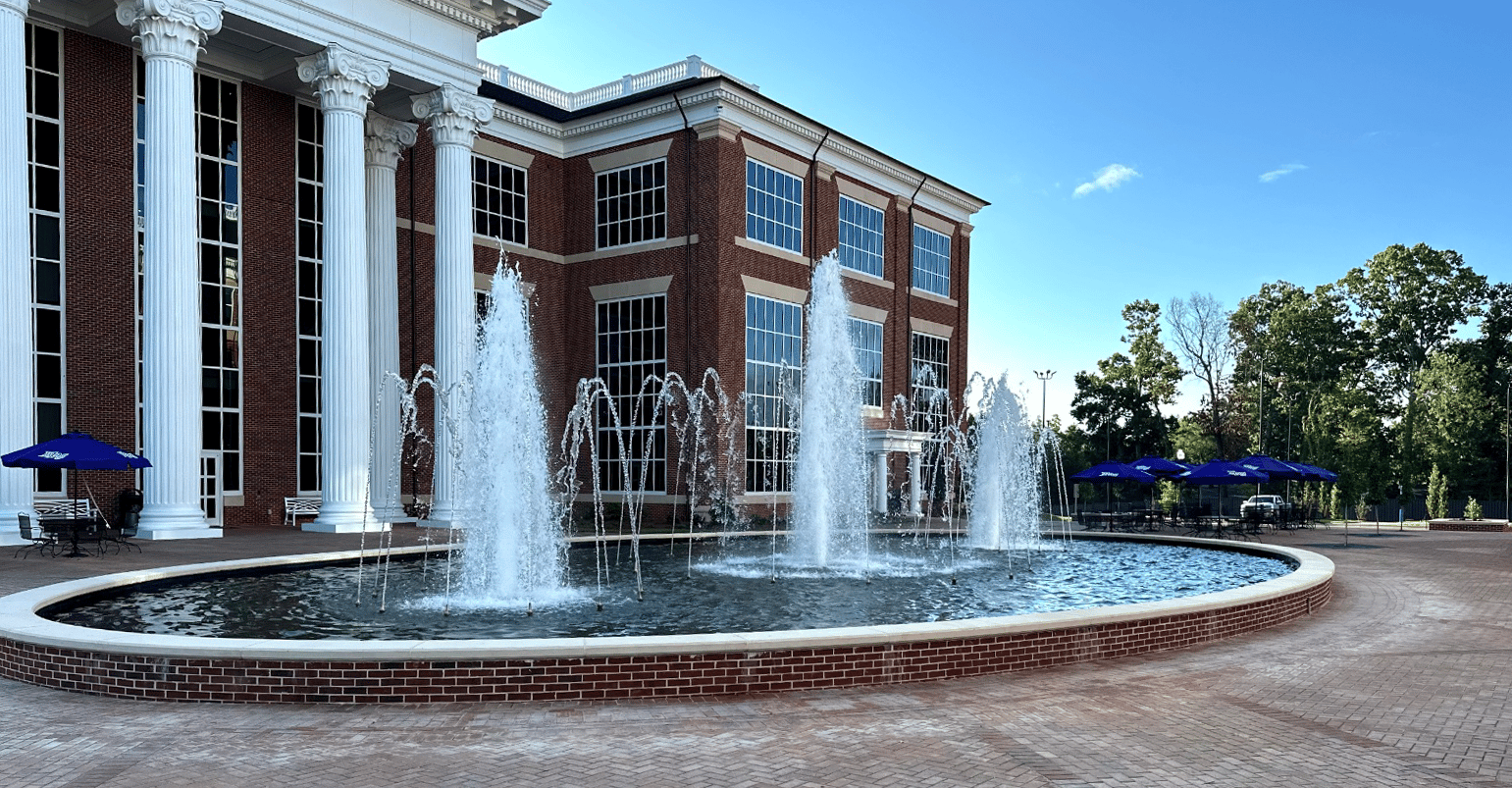
At High Point University's Academic and Dental Building Plaza, an oval-shaped fountain with three evenly spaced geyser jets demonstrates how a relatively simple water feature can complement a formal academic setting. Its balanced design introduces movement and visual interest while maintaining harmony with the surrounding architecture.
For landscape architects and campus planners, architectural fountains offer flexibility in scale, appearance, and water effects, allowing them to enhance both intimate courtyards and expansive public plazas.
Biophilic Water Features: Creating Peaceful Campus Retreats
While architectural and sculptural fountains often serve as prominent visual landmarks, biophilic and naturalistic water features offer a different experience. Streams, waterfalls, ponds, and other landscape-integrated water features can create peaceful outdoor environments that encourage relaxation, reflection, and connection with nature.
These installations are particularly well suited for campus gardens, courtyards, outdoor study areas, and landscaped spaces near academic buildings. Flowing water introduces natural sound and movement, helping create a sense of separation from the activity of surrounding campus life.
Naturalistic water features can also be integrated with stonework, native and pollinator-friendly plantings, pathways, and seating areas to create cohesive outdoor environments. When designed with appropriate filtration, water treatment, and habitat considerations, certain installations can also support aquatic life and local biodiversity.
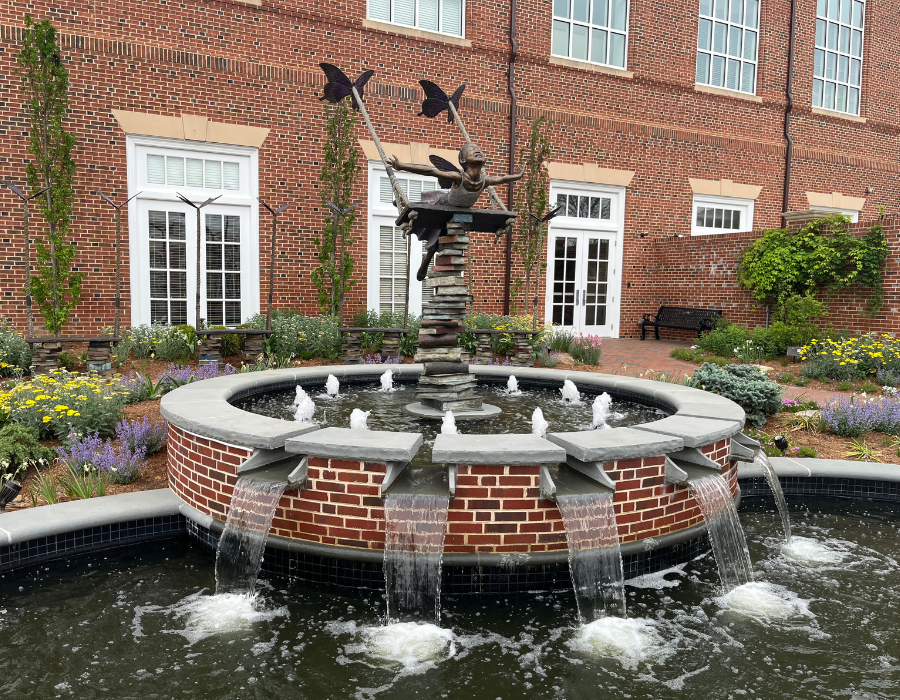
At High Point University's Plato S. Wilson School of Commerce, a naturalistic koi pond demonstrates how water can contribute to a more tranquil academic environment. A bubbling mountain stream flows into an irregularly shaped pond surrounded by custom bluestone caps and pollinator-friendly landscaping. Biological water treatment and filtration help maintain water quality for the pond's aquatic life.
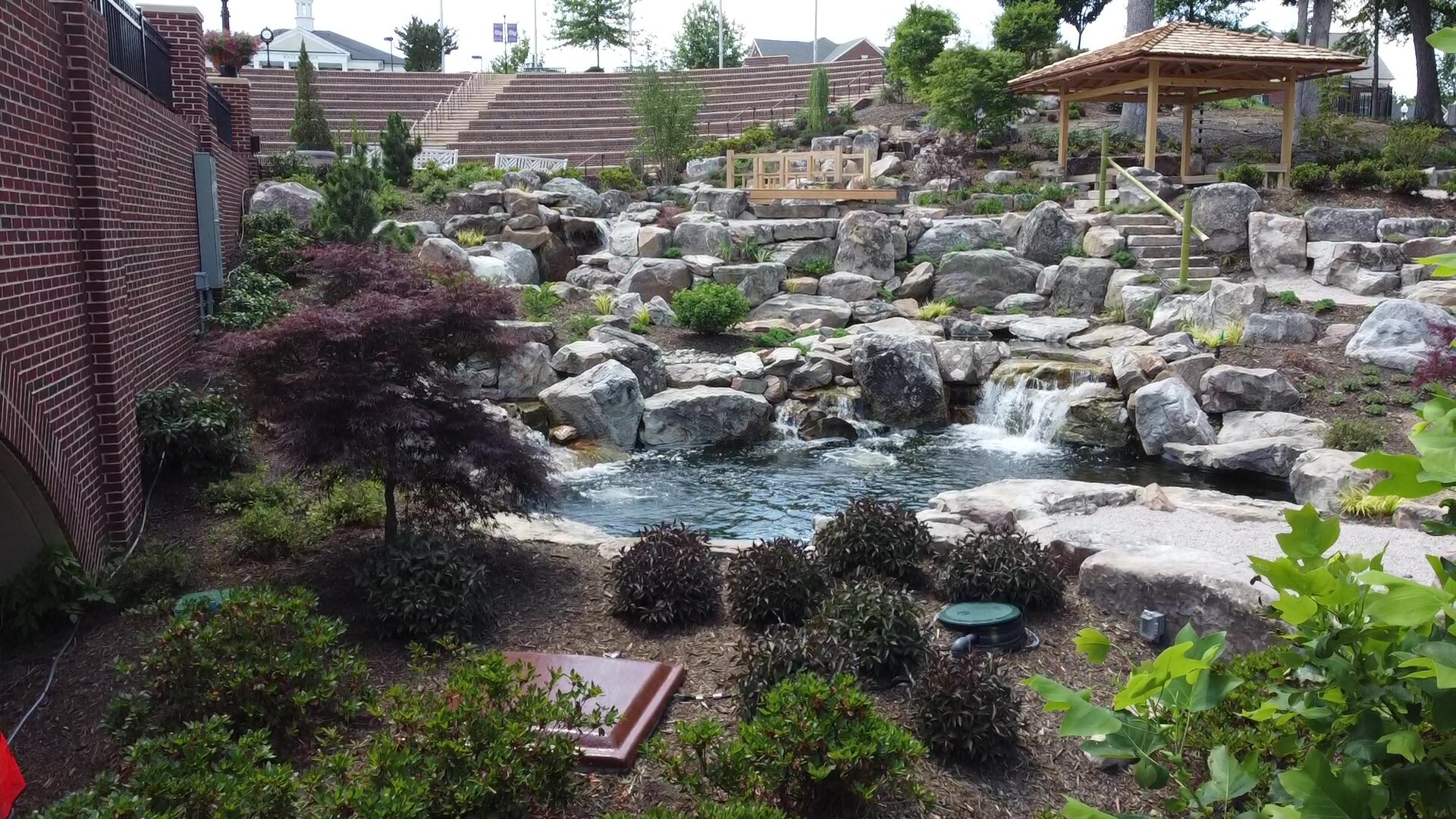
Another example is the Cottrell Japanese Gardens at High Point University, where a custom water feature complements a Japanese-inspired landscape with winding pathways, stone terraces, and a traditional-style tea house. Designed to evoke the movement of a mountain stream, the water feature helps establish an atmosphere centered on balance, tranquility, and natural beauty.
These applications demonstrate how biophilic water features can enhance campus landscapes without relying on dramatic displays, instead creating welcoming environments where students, faculty, and visitors can pause, gather, and recharge.
Fountain Lighting: Extending the Campus Experience After Dark
Lighting is an important consideration across nearly every type of campus fountain application. Beyond illuminating water features after sunset, strategically designed fountain lighting can reinforce institutional identity, highlight architectural details, and enhance the atmosphere of outdoor gathering spaces.
Color-changing underwater LED lighting allows universities to incorporate school colors into fountain displays, creating opportunities to celebrate athletic victories, commencement ceremonies, homecoming events, and other campus milestones. Lighting can also accentuate sculptural elements, illuminate individual water effects, and create visual interest in plazas, pedestrian areas, and campus entrances during evening hours.
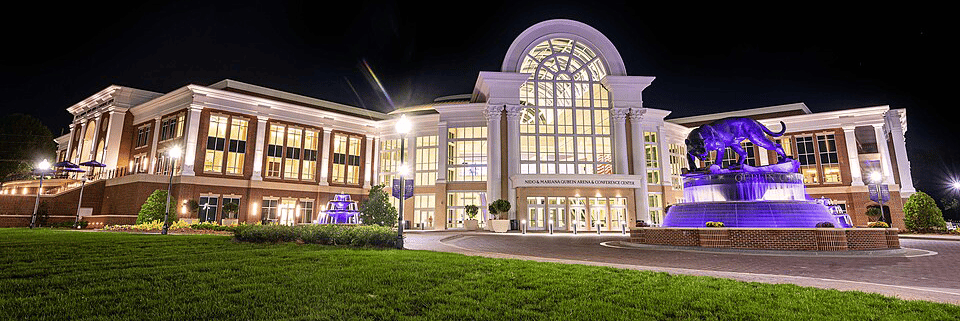
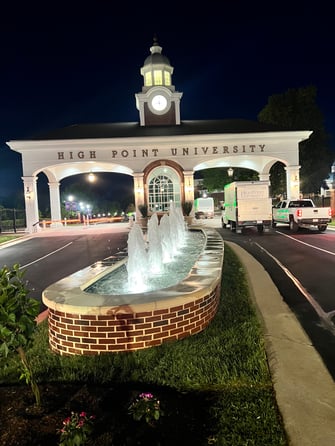
At High Point University, the Qubein Arena Fountains demonstrate how lighting can enhance sculptural water features while celebrating school pride. Purple LED lighting, reflecting the university's signature color, illuminates the fountain's cascading water and prominent panther sculpture, creating a striking nighttime display. Elsewhere on campus, an illuminated entryway fountain creates a welcoming first impression for students, faculty, and visitors while enhancing the university's visual identity after dark.
Modern lighting technology can also breathe new life into existing campus landmarks. 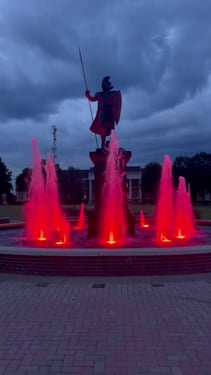 At Troy University, updated LED lighting illuminates the Trojan Fountain in the university's signature cardinal red, while color-changing LED upgrades to Atlanta's historic Fountain of Light demonstrate how lighting can enhance an established water feature while preserving its original character.
When integrated with fountain controls and programming, lighting and water effects can be coordinated to create dynamic displays suited to different events, seasons, or operating schedules. From illuminating iconic landmarks to enhancing campus entrances and gathering spaces, thoughtfully designed fountain lighting extends the visual impact of water features well beyond daylight hours.
What Should Universities Consider When Planning a Campus Fountain?
Selecting the right water feature begins with understanding how the space will be used and what the university hopes to achieve. A prominent entrance fountain may be designed to communicate institutional identity, while a courtyard water feature may prioritize relaxation, architectural harmony, or informal gathering.
Several considerations can help guide the design process:
- Location and purpose: Determine whether the fountain will serve as a landmark, gathering space, architectural focal point, commemorative feature, or naturalistic retreat.
- Campus identity: Consider how sculpture, materials, water effects, and lighting can reflect the university's history, traditions, and architectural character.
- Scale and surrounding architecture: Select fountain proportions and water effects that complement adjacent buildings, pedestrian areas, and landscape features.
- Water management and maintenance: Evaluate filtration, water treatment, equipment accessibility, operating costs, and long-term maintenance requirements.
- Lighting and controls: Explore how programmable water effects and LED lighting can support campus events, seasonal displays, and operational efficiency.
- Safety and accessibility: Consider pedestrian circulation, accessible routes, slip resistance, and how students and visitors will interact with the surrounding space.
- Long-term flexibility: Plan for future maintenance, equipment upgrades, and changing campus needs.
Thoughtful planning and collaboration between landscape architects, engineers, fountain specialists, and university stakeholders can help ensure the completed water feature meets both aesthetic and operational goals.
Designing Collegiate Water Features That Enhance the University Experience
From sculptural landmarks and historic restorations to architectural fountains and peaceful naturalistic retreats, water features offer colleges and universities a wide range of opportunities to enhance their campuses.
 Each application serves a different purpose, but all can contribute to a stronger sense of place. Sculptural fountains celebrate institutional identity, restored fountains preserve meaningful history, architectural water features enhance shared spaces, and naturalistic installations provide opportunities for relaxation and connection.
When thoughtfully designed and engineered, campus fountains become more than decorative elements. They create memorable experiences, strengthen connections to university traditions, and contribute to outdoor environments that students, faculty, alumni, and visitors can enjoy for generations.
Fountain People supports a wide range of architectural and specialty fountain applications through fountain equipment, lighting, controls, water management systems, and design and engineering services. From new campus installations to the restoration of existing landmarks, our team works with designers and project stakeholders to bring unique water feature concepts to life.